
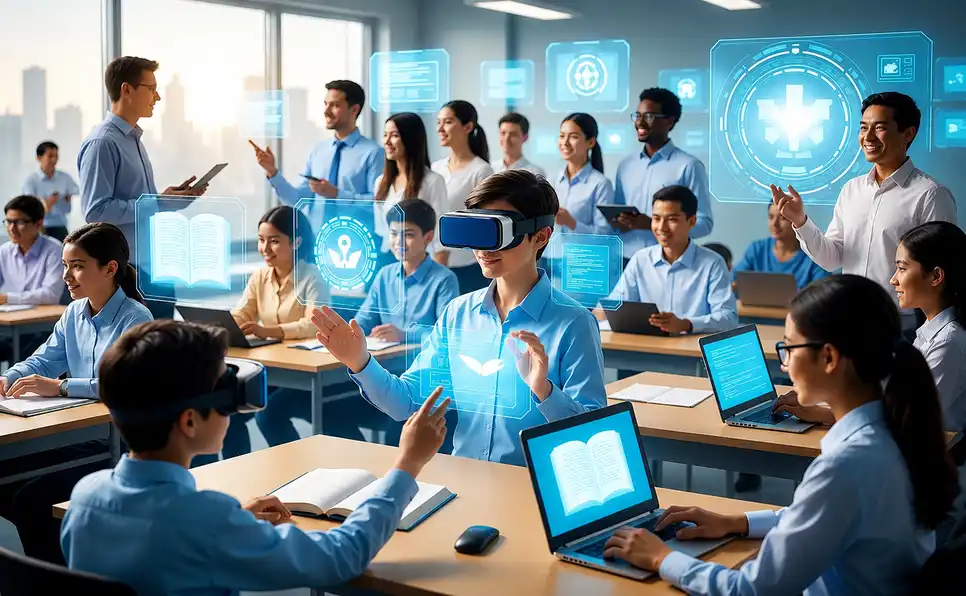
Technology has revolutionized nearly every aspect of our lives, and education is one of the most impacted fields. How Does Technology Transform Education? This important question comes up often among students, parents, and teachers. In easy words, technology is changing education from old-style fixed classrooms into flexible, smart, and personalized learning that fits every student’s needs.
This guide is written for beginners and intermediate learners. You will find clear explanations, real examples, simple code, guiding questions, benefits, challenges, and a future outlook. Let’s understand How Does Technology Transform Education in detail.
1. How Does Technology Transform Education? – By Increasing Access for Everyone
How Does Technology Transform Education? The first big change is that it has broken all old barriers of location, time, and money. Earlier, good education was only available in big cities or expensive schools. Now, with just a smartphone and internet, students anywhere can learn from top teachers and universities.
Platforms like Khan Academy, Coursera, edX, and local Pakistani platforms such as Sabaq and Taleemabad offer free or affordable courses. The COVID-19 pandemic proved this power when schools shifted to online tools like Zoom and Google Classroom, allowing learning to continue without physical classes.
Guiding Question for Beginners: Have you ever missed a class or wanted to learn something new but couldn’t due to distance or timing? Which free online platform will you try this week?
This increased access is especially helpful in countries like Pakistan, where many students live in rural areas. In 2026, millions of learners will benefit from this transformation, reducing the gap between rich and poor students.
2. How Does Technology Transform Education? – Through Personalized Adaptive Learning
Another powerful answer to How Does Technology Transform Education? is personalization. Traditional teaching uses one pace for all students. Technology uses AI to understand each student’s level and adjust lessons automatically.
If a student is weak in a topic, the system gives simpler explanations and extra practice. If the student is fast, it gives harder questions. This makes learning less frustrating and more successful.
Guiding Question for Intermediate Learners: In which subject do you feel left behind or bored because the pace is not right for you? How would personalized learning change your results?
Simple 2-Line Source Code Example: Here is a very basic two-line Python code that shows the idea of simple feedback (you can run it easily):
This tiny code demonstrates how technology can give instant feedback. Real EdTech apps use much smarter versions of such logic with AI to create fully personalized learning paths.
TechInGot helps students and teachers understand and use such simple tools in daily learning.
3. How Does Technology Transform Education? – By Making Learning More Engaging and Fun
How Does Technology Transform Education? It also makes learning exciting instead of boring. Students no longer just read books or listen to long lectures. They now use games, videos, animations, and virtual experiences.
- Gamification (points, badges, levels) in apps like Duolingo keeps students motivated.
- Virtual Reality (VR) and Augmented Reality (AR) let students “visit” historical places or see inside the human body.
- Interactive videos and simulations make science and math practical and safe.
Guiding Question for You: Which subject feels dry or difficult right now? Imagine learning it with games or virtual tours — would you enjoy it more?
Studies show that students using interactive technology stay more focused and remember concepts longer. In 2026, most teachers use at least some engaging digital tools daily.
4. How Does Technology Transform Education? – By Improving Collaboration and Helping Teachers
How Does Technology Transform Education? It also connects students and teachers better. Tools like Google Docs, Microsoft Teams, and online forums allow real-time group work even if students are in different cities or countries.
Teachers get help too. AI can automatically grade tests, prepare lesson plans, and show which students need extra attention. This gives teachers more time to mentor and guide students personally.
Guiding Question for You: If you are a student, how can you use online tools to work better with your classmates? If you are a teacher, which daily task would you like technology to make easier?
This collaboration prepares students for modern jobs where teamwork and digital skills are essential.
5. How Does Technology Transform Education? – Preparing Students for the Future While Solving Challenges
Finally, How Does Technology Transform Education? By building important future skills such as coding, critical thinking, problem-solving, and digital literacy. Students learn how to keep updating their knowledge throughout life.
However, there are some challenges:
- Not everyone has good devices or fast internet (Digital Divide)
- Too much screen time can affect the eyes and health
- The privacy of student data needs protection
- Risk of depending too much on AI instead of thinking deeply
Guiding Question for You: What is one problem you or your school faces with technology in education? What small solution can you start with?
The best approach is balanced use — technology as a helpful tool along with good teachers and real-world practice. Governments and schools are working on better internet access and teacher training programs.
The Future of Technology in Education (2026 Onwards)
In the coming years, we will see more generative AI that creates custom lessons, cheaper VR headsets, and short micro-credentials for quick skill learning. Education will become truly lifelong and flexible.
Final Guiding Question: What is the first small step you will take today — trying a new app, running simple code, or discussing with your teacher?
Conclusion
How Does Technology Transform Education? It makes education more open, personalized, engaging, collaborative, and future-focused. From breaking access barriers to giving instant feedback through simple code, technology is creating better opportunities for every learner.
For Beginners: Start with one free platform and explore slowly. For Intermediate Learners: Try the 2-line code example above, then gradually move on to bigger projects.
The transformation is real and happening fast. By using technology wisely, students and teachers can achieve much better results. Embrace it step by step and keep learning!