
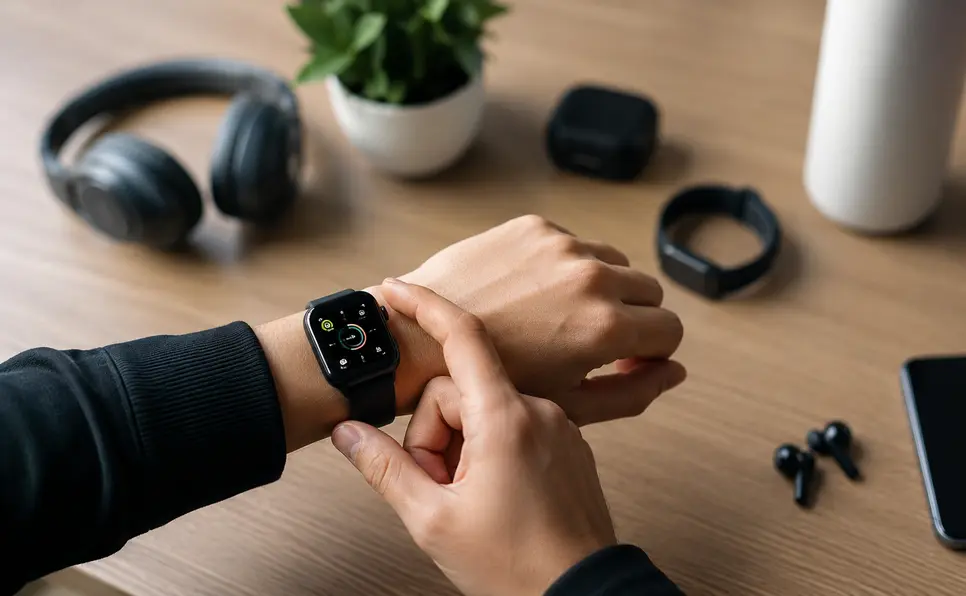
Let’s be honest, most of us have glanced at someone’s wrist and wondered what that slim little device actually does. Smartwatches, fitness rings, health trackers wearable tech has quietly become part of everyday life. And yet, a lot of people still aren’t quite sure what these gadgets are really for, or whether one is worth buying.
This guide is for those people. No jargon, no tech fluff, just a straightforward look at what wearable technology is, why it’s taken off the way it has, and what you should know before buying one.
What Even Is Wearable Technology?
At its core, wearable technology is exactly what it sounds like: electronic devices you wear on your body. A smartwatch on your wrist, a fitness band, smart glasses, even certain types of clothing with built-in sensors. What they all have in common is that they connect to the internet and collect data about you.
Inside these devices are tiny sensors. Some measure your heart rate. Others count your steps, track your sleep, or even check your blood-oxygen levels. All of that information gets sent to an app on your phone, which then turns it into something readable: charts, summaries, weekly reports, that sort of thing.
It sounds complicated, but using one is genuinely simple. You strap it on, pair it with your phone, and the device pretty much does the rest.
According to Statista, the global wearable tech market has been growing fast, and it shows no signs of slowing down.
Why Has Everyone Suddenly Started Using These?
It wasn’t that long ago that tracking your heart rate meant going to a doctor. Now people check it between meetings. That shift happened for a few reasons.
The biggest one is convenience. Having a small device on your wrist that quietly monitors your health throughout the day without you having to do anything is genuinely useful. It fits into your life rather than disrupting it.
There’s also been a real shift in how people think about health. More people want to understand their own bodies. How well did I sleep? Am I actually moving enough? Is my resting heart rate going up or down? These questions used to be hard to answer. Now they’re a tap away.
And then there’s the design factor, which doesn’t get enough credit. Early smartwatches looked clunky. They screamed “tech product.” Brands like Apple, Samsung, and Garmin have put serious effort into making wearables look good, not just functional. A lot of people wear them now, and you’d never guess they were health monitors.
The Different Types of Wearables
Not all wearable devices do the same thing. Here’s a quick breakdown of what’s out there.
Smartwatches are the most common. The Apple Watch and Samsung Galaxy Watch are the big names. These do a lot — fitness tracking, notifications, calls, heart monitoring, even ECG readings on some models.
Fitness trackers are simpler and usually cheaper. Fitbit is probably the most well-known brand here. These focus mainly on steps, sleep, and calories. The battery lasts longer, and they tend to be lighter and less obtrusive.
Smart rings are newer and still finding their audience. The Oura Ring is the standout product in this space. It looks like a regular ring but tracks sleep, activity, and recovery. A good option if you’d rather not wear something on your wrist.
Smart glasses are more niche. They overlay information onto what you’re seeing: directions, messages, that kind of thing. Useful in specific situations but not quite mainstream yet.
Smart clothing is still early days, mostly used by athletes. Shirts or shorts with embedded sensors that track muscle activity, posture, or heart rate during training.
How Do They Actually Work?
The technical side of this is simpler than it sounds. Inside your wearable, there are tiny sensors accelerometers to detect movement, optical sensors to measure heart rate, and GPS chips in some models. They’re running quietly in the background all day.
Every so often, the device syncs that data to an app on your phone via Bluetooth. The app processes everything and gives you something readable. Your step count for the day. How long you spent in deep sleep. Whether your heart rate spiked during that afternoon walk.
Some wearables also back up data to the cloud, which is useful if you want to look at trends over weeks or months rather than just day to day.
What Are the Real Benefits?
Health monitoring is probably the most valuable thing a wearable does. Knowing your resting heart rate, tracking your sleep quality, or spotting patterns in your activity level can genuinely help you make better choices. Some smartwatches can even detect signs of atrial fibrillation, a serious heart condition that often goes unnoticed. Mayo Clinic has useful information on how wearable data is increasingly being used in medical settings.
Motivation is a real thing too. Seeing that you’re 800 steps short of your daily goal has a way of making you take the stairs instead of the lift. It’s a small psychological nudge, but it works for a lot of people.
Convenience is underrated. Checking a notification or declining a call from your wrist without pulling out your phone sounds minor until you’re doing it every day.
Safety features have become increasingly useful. Fall detection, emergency SOS alerts these aren’t just gimmicks. For older adults especially, they provide real peace of mind.
Sleep tracking has genuinely changed how some people approach rest. Once you can see your sleep patterns clearly, you start making different choices: earlier bedtimes, less caffeine, fewer late-night screens.
For more helpful tech content, visit TechInGot.
The Downsides — Because There Are Some
No device is perfect, and wearables have their share of limitations.
Privacy is a legitimate concern. These gadgets collect a lot of personal health data, and it’s worth understanding what companies do with it. Read the privacy policy before you commit to a device.
Battery life varies a lot. Some smartwatches die after a day. Others last a week. If you have to charge it every night, it becomes another thing to remember, which some people find annoying.
Accuracy is not perfect. Wearable sensors are good, but they’re not medical-grade. Treat the data as helpful guidance, not clinical fact.
Cost is a real barrier. A good smartwatch can run into hundreds of dollars. That said, there are decent options at more accessible price points; you don’t have to go top-of-the-range to get value.
The stress trap is something worth being aware of. Constantly checking your heart rate, sleep score, or step count can sometimes create anxiety rather than calm it. These tools are meant to help you, not rule your day.
Wearables Beyond the Gym
Most people associate wearables with fitness, but they’ve moved well beyond that.
In healthcare, doctors are increasingly using wearable data to monitor patients with chronic conditions remotely, including heart disease, diabetes, and more. Healthline regularly covers how wearable technology is being integrated into modern medicine.
In professional sports, performance tracking is standard. Athletes and coaches use wearable data to fine-tune training, manage fatigue, and reduce injury risk.
In workplace safety, industries like construction use wearables to monitor physical strain and environmental hazards in real time.
In elderly care, fall detection and health alerts have made wearables a practical safety net for families looking after older relatives who live independently.
Before You Buy — Five Things to Think About
- What do you actually want it for? Be honest with yourself. Fitness tracking, health monitoring, or just getting notifications on your wrist? The answer changes which device makes sense.
- Battery life matters more than you think. Daily charging is fine for some people. For others, it’s a dealbreaker. Check this before buying.
- Make sure it works with your phone. Some devices are built for iPhone, others for Android. Compatibility matters.
- Wear it before you commit (if you can). Comfort and design matter because it’s going on your wrist every single day. Something that looks great in photos might feel uncomfortable after a few hours.
- Check the privacy policy. Understand what data is collected and what happens to it. Some companies share data with third parties. Worth knowing upfront.
CNET’s Wearables Guide is a solid resource if you want side-by-side comparisons before making a decision.
Where Is This All Heading?
Wearable technology is moving fast. Future devices are expected to monitor blood pressure continuously, detect early signs of illness before symptoms appear, and deliver AI-powered health insights that are genuinely personalised, not just generic step goals.
Some researchers believe wearables will eventually be woven into everyday clothing rather than worn as separate devices. And further out, we may see technology that sits even closer to the body: tiny implants that track health from the inside. That’s still a long way off, but it gives you a sense of where the industry is pointed.
To understand how AI is shaping this and other areas of tech, check out our piece on How AI is Transforming the Way We Work and Live on TechInGot.
Final Thoughts
Wearable technology has come a long way from the chunky fitness bands of ten years ago. Today’s devices are genuinely useful for health, for convenience, for staying connected, and they’ve been designed to fit into real life rather than demand attention.
They’re not for everyone. But if you’ve been curious about them, now is probably a good time to try one. The technology is mature, the options are broad, and the prices have come down enough that you don’t need to spend a fortune to get started.
For more straightforward guides on tech that actually makes sense in everyday life, visit TechInGot.