
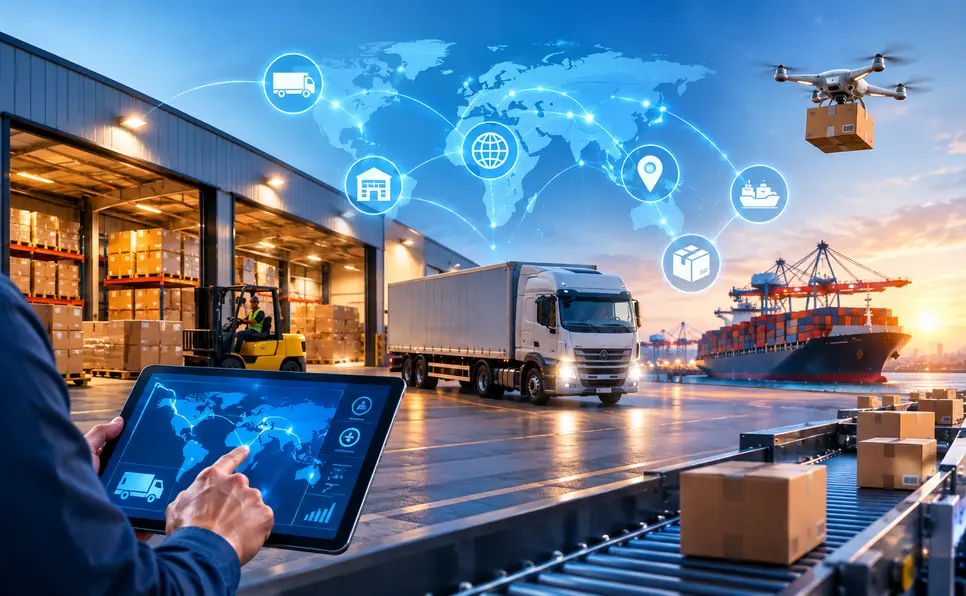
A truck sits at a loading dock for six extra hours. Why? Because nobody knew the shipment ahead of it was running late. Now multiply that by thousands of trucks, warehouses, and ports, every single day, all over the world. That’s basically why moving goods still loses so much time and money to problems that, honestly, shouldn’t exist anymore in 2026. So what’s one way that technology can improve the distribution of goods? Real-time tracking paired with AI-driven visibility is probably the clearest answer out there, and it’s already changing how products travel from a factory floor to someone’s front door.
This piece breaks down how that actually works, why it matters, and what it looks like in the real world. No corporate buzzwords, just the actual mechanics behind modern supply chain technology.
What Is One Way That Technology Can Improve the Distribution of Goods, Exactly?
Here’s the short version. Real-time tracking, powered by GPS, IoT sensors, and AI, gives businesses constant visibility into where a shipment actually is, not where it’s supposed to be. That difference matters more than it sounds like it should. Old-school logistics ran on scheduled check-ins and paperwork that showed where something should be, usually hours after it had already gotten there.
McKinsey found that folding AI into supply chain operations can cut logistics costs by 5 to 20 percent. That’s not pocket change for an industry moving trillions of dollars in goods every year. And the savings come from something pretty simple, really: fewer surprises. Once a company knows exactly where a shipment sits right now, a delay can get handled before it turns into a missed delivery window, an empty shelf, or a customer who’s just done waiting.
Why Visibility Has Always Been the Missing Piece
Global supply chains have dealt with the same basic problem forever. Goods cross a dozen countries, currencies, and regulatory systems, and keeping track of all that used to mean a whole lot of guesswork. A shipment leaves a factory in Vietnam, and from there, tracking it accurately across ports, customs, and different carriers has historically been a genuine headache.
AI-driven logistics systems fix a good chunk of that by pulling data from IoT sensors, GPS trackers, and digital paperwork, all at the same time. The algorithms spot bottlenecks forming at ports, predict delays from congestion or bad weather, and suggest a different route before anyone even notices trouble brewing. Big logistics companies now run AI platforms with true end-to-end shipment tracking, so plans get adjusted before a delay actually costs money, not after the fact.
How Real-Time Tracking Actually Works, Day to Day
It helps to picture this in action instead of treating it like some abstract idea.
GPS and IoT sensors get attached to shipping containers, pallets, sometimes even individual high-value items. These send a steady stream of location data, and more and more, condition data too, temperature, humidity, whether something got jostled roughly during transit.
AI platforms process all of that constantly, comparing it against expected timelines and flagging anything that looks off. One platform’s AI system, built specifically for arrival predictions, pulls in over 150 different data points, things like driver hours-of-service limits and how long a truck usually sits during detention at a dock, just to generate genuinely accurate arrival estimates.
And the alerts go out the second something changes. A cold chain shipment of vaccines that starts warming past a safe threshold triggers a notification right away. Not a discovery three days later when it shows up already spoiled.
This is basically the answer to what one way technology can improve the distribution of goods. It’s not one flashy invention. It’s a quiet, constant stream of information replacing what used to be total blind spots.
From Reactive to Predictive: The Real Shift Happening Right Now
Older supply chain tools were reactive by nature. They flagged a problem after it had already started costing money. A shipment got stuck at a port, and nobody found out until it didn’t show up on schedule, way too late to reroute it or give a customer a heads-up.
What’s changing now is the shift toward prediction instead of reaction. AI models trained on years of delay patterns, weather data, and port congestion trends can flag a likely problem days ahead of time. That gap, between knowing something might go wrong and finding out it already went wrong, is where basically all the real value sits. A manager who gets a two-day warning about port congestion can reroute the shipment. One who finds out after the fact just has to say sorry.
Automation Beyond Just Tracking
Tracking is the clearest example of what is one way that technology can improve the distribution of goods, sure, but it’s nowhere near the only piece of logistics technology changing how goods actually move.
Warehouse automation, especially AI-driven computer vision, helps warehouses process goods faster, cut down on mistakes, and use physical space better. A camera system that instantly checks a package’s contents and destination catches things a tired human eye might miss halfway through a long shift.
Automated order processing and appointment scheduling cut out a lot of repetitive manual work too, freeing staff up to actually deal with problems instead of drowning in paperwork. That kind of automation cuts human error and speeds up response times across an entire distribution network.
Digital twins are another piece worth knowing about, basically detailed virtual models of an entire supply network. They let companies test what happens if a specific port shuts down or a supplier goes offline, before it actually happens. That used to require expensive guesswork. Now it’s more like running a quick simulation before spending real money.
Real Companies Putting This Into Practice
This isn’t just theory sitting in some industry report nobody reads. Real companies are doing this right now. In August 2026, a Singapore-based logistics tech company called MG Ship launched an AI-powered multimodal tracking platform built specifically to help retailers and manufacturers get real-time control over their supply chains. It combines real-time tracking with predictive AI, so businesses can anticipate delays, dodge stockouts, and match supply with actual demand instead of just guessing.
That’s a pretty direct, current example of what is one way that technology can improve the distribution of goods. It’s happening at specific, named companies solving specific, named problems, not floating around in some abstract white paper.
Why This Matters for Regular Businesses, Not Just Massive Corporations
It’s easy to assume this stuff only matters for giant companies moving container ships full of goods. That’s honestly not true anymore. Smaller and mid-sized businesses increasingly get access to the same kind of AI-driven visibility, usually through subscription platforms instead of building anything custom from scratch.
A small business selling handmade goods online, shipping through a third-party logistics provider, gets the exact same real-time tracking infrastructure a massive retailer uses, just at a smaller scale. When a customer asks where their order is, “it’s somewhere in transit, we’ll update soon” doesn’t cut it anymore. Real-time visibility means an actual, accurate answer, and that builds trust in a way vague reassurances never really could.
The Honest Challenges Nobody Glosses Over
None of this comes free of friction, and it’s worth being upfront about that instead of pretending it’s some smooth, fully solved problem.
A PwC survey of over 767 supply chain leaders found that 85% think they’re ahead of most competitors on digital transformation, but 89% admitted their tech investments haven’t fully delivered what they expected. That gap between confidence and actual results says a lot. Plenty of companies buy the technology without ever fixing the underlying data quality or process issues that would’ve made it useful in the first place.
Adoption lags in a lot of places too, thanks to messy data, clunky integration between old systems and new ones, and unclear ownership over who actually manages all this incoming data. AI creates real value where the data pipelines underneath are already solid. It creates frustration and wasted budget where they aren’t. This unglamorous groundwork is really what decides whether any of this technology pays off at all.
What Businesses Should Actually Do Before Investing
For any business thinking about this kind of technology, a few practical steps matter more than picking whatever platform looks the flashiest.
Start by checking existing data quality before bolting any new AI tool on top of it. A predictive system built on messy, inconsistent data just produces confidently wrong predictions, faster than a person ever could manage on their own. Picking one narrow problem to solve first, like tracking temperature-sensitive shipments or predicting delays on a single trade route, works a lot better than trying to overhaul an entire supply chain overnight. Small, measurable wins build the case for bigger investment down the line.
Worth asking too: does this platform actually plug into the systems already in place, or does it just become another isolated dashboard nobody checks? A tracking system sitting unused in some clunky separate tool isn’t solving anything.
The Environmental Upside Nobody Talks About Enough
There’s a side benefit here that doesn’t get nearly enough attention: less waste. When businesses can predict demand accurately and route shipments more efficiently, they burn less fuel on unnecessary trips, avoid overproducing goods nobody buys, and cut down on spoiled inventory from delayed cold chain shipments.
AI-driven route optimization directly cuts the number of miles trucks need to drive to complete the same deliveries, meaning less fuel burned and fewer emissions per shipment. Inbound Logistics’ 2026 outlook notes that better route density and mileage reduction are already showing up as real, measurable gains at companies with solid data pipelines feeding their AI systems. Nobody marketed that loudly, but it’s a genuine outcome of the same logistics technology making deliveries faster and more reliable.
Reduced spoilage matters just as much in industries like food and pharmaceuticals, where a temperature-controlled shipment going bad doesn’t just cost money. It wastes resources that went into making something that never reaches anyone who actually needed it. Real-time condition monitoring catches these problems early enough to actually save the shipment, instead of writing it off as a loss after it’s too late.
Where This Technology Is Headed Next
A few trends stand out looking ahead. Autonomous trucking and delivery drones, still AI-guided, are expected to keep pushing past pilot programs into more everyday use over the next few years. Agentic AI, systems handling routine communication and decisions mostly on their own, is set to automate a lot of the back-and-forth coordination that eats up so much staff time in logistics right now.
There’s also a growing shift toward what people call “local for local” sourcing, where companies produce and source goods closer to their actual customers, cutting down the distance and complexity that causes so many delivery headaches in the first place. Paired with AI-powered planning, that kind of localized setup can genuinely reduce risk and speed up how fast a business responds when demand suddenly shifts.
Frequently Asked Questions
Since this comes up constantly for anyone researching logistics technology, here are straightforward answers to what people actually want to know.
What is one way that technology can improve the distribution of goods most directly?
Real-time tracking combined with AI-driven predictive analytics gives businesses constant, accurate visibility into shipments, letting teams catch and fix problems before they turn into missed deliveries or costly delays.
Does this kind of technology only benefit large corporations?
Not really. Subscription-based tracking and AI platforms have made this kind of supply chain visibility a lot more accessible to small and mid-sized businesses, not just companies with massive in-house logistics teams.
What’s the biggest obstacle stopping businesses from actually benefiting from this?
Data quality and integration problems, more often than the technology itself. AI does great work when it’s fed clean, well-organized data, and pretty poorly when it isn’t, no matter how advanced the model underneath happens to be.
Will automation eventually replace human logistics workers entirely?
Probably not anytime soon. Most current gains come from automating repetitive tasks like order processing and scheduling, freeing staff up for judgment calls and problem-solving that still need a real person, not wiping out the workforce entirely.
Final Takeaway
So, what is one way that technology can improve the distribution of goods? Real-time, AI-powered tracking turns blind spots into actual visibility, and reactive scrambling into proactive planning. That shift alone is already cutting logistics costs by double digits at companies doing it well, and it’s showing up in real platforms, real launches, and real businesses right now, not just in some theoretical industry report.
The technology isn’t magic, and it won’t fix a messy, disorganized supply chain by itself. But paired with solid data habits and one clear problem to solve first, real-time tracking stands out as one of the most concrete, provable ways technology is reshaping how goods move around the world today. For more on how tech decisions like this should get evaluated carefully before investing, TechInGot’s guide on mastering cybersecurity basics covers the same due-diligence mindset that applies to any new supply chain platform handling sensitive shipment and customer data.