A few years ago, growing a business online was much simpler than it is today. Companies could launch a website, publish a few pages, and expect people to find them. Now, the online world is far more competitive. Millions of businesses are trying to attract attention, which means brands need smarter ways to connect with potential customers.
This is where Digital Marketing Technology comes into the picture.
At TechInGot, we often see business owners, bloggers, and even new marketers asking the same question: what exactly is Digital Marketing Technology, and why does everyone keep talking about it?
The simple answer is that it combines marketing strategies with technology to help businesses find the right audience, understand customer behavior, and improve results. Instead of relying on guesswork, companies can use data and digital tools to make better decisions.
Think about the last time you searched for a product on Google. Maybe you were looking for a smartphone, a software tool, or a pair of running shoes. After visiting a few websites, you probably started seeing related advertisements on social media or other websites. That entire process is powered by Digital Marketing Technology.
Businesses today use different tools to understand what people are searching for, which content they enjoy, and what encourages them to make a purchase. These technologies make marketing more efficient and help companies spend their budgets more wisely.
Understanding Digital Marketing Technology
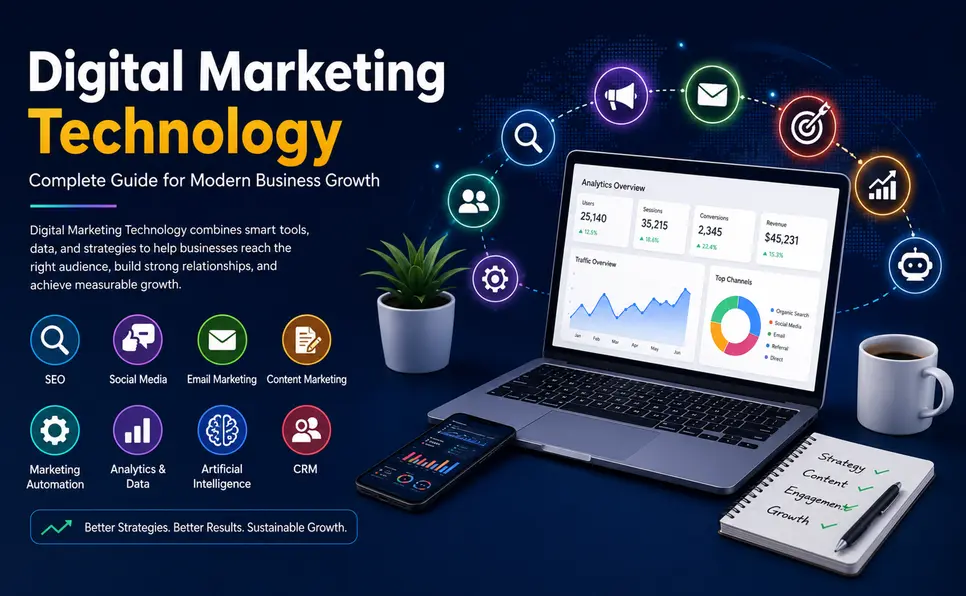
Digital Marketing Technology is not a single platform or software. Instead, it is a collection of tools and systems that work together to support online marketing activities.
Some tools help businesses improve their visibility in search engines. Others help manage social media campaigns, automate emails, track website visitors, or analyze customer behavior.
The main goal is simple: helping businesses reach people who are genuinely interested in their products or services.
For example, a local clothing store can use digital marketing tools to discover what customers are searching for online. Based on that information, they can create content, run advertisements, and promote products that match customer interests.
Without technology, this process would take a huge amount of time and resources. Modern platforms make it possible to gather insights quickly and act on them almost instantly.
Why Digital Marketing Technology Matters Today
Consumer behavior has changed dramatically over the last decade. Before making a purchase, most people now research products online, read reviews, compare prices, and watch videos. Because of this shift, businesses need a strong digital presence if they want to remain competitive.
Digital Marketing Technology helps businesses appear where customers are already spending their time. Whether someone is browsing Google, scrolling through Instagram, watching YouTube videos, or reading blogs, digital tools help brands stay visible throughout the customer journey.
Another major advantage is measurement. Traditional advertising often makes it difficult to know exactly what worked. With digital marketing, businesses can see how many people clicked an advertisement, visited a website, signed up for a newsletter, or completed a purchase.
This information helps marketers understand what is working and what needs improvement. As a result, businesses can continuously refine their strategies and improve their return on investment.
The Role of SEO in Digital Marketing Technology
Search Engine Optimization, commonly known as SEO, remains one of the most valuable parts of digital marketing.
Whenever someone searches for information online, search engines try to show the most useful and relevant results. SEO helps businesses improve their chances of appearing in those results.
However, modern SEO is no longer just about adding keywords to a webpage. Search engines have become much smarter. They now evaluate content quality, website speed, user experience, mobile friendliness, and overall usefulness.
A business that consistently publishes helpful content often has a better chance of earning long-term visibility than one that focuses only on short-term tactics.
This is one reason why many companies invest heavily in SEO. Unlike paid advertising, strong organic rankings can continue bringing visitors for months or even years after content is published.
Social Media and the Technology Behind It
Social media has become one of the most important communication channels for modern businesses. Platforms such as Facebook, Instagram, LinkedIn, TikTok, and X allow brands to interact directly with their audience.
Managing multiple platforms manually can be difficult, which is why businesses use social media management tools. These platforms help schedule posts, monitor engagement, analyze audience behavior, and track campaign performance.
Beyond promotion, social media gives businesses an opportunity to build trust. Customers can ask questions, leave feedback, and interact with brands in real time. These interactions often create stronger relationships than traditional advertising ever could.
When used correctly, social media technology helps businesses stay connected with customers while also improving brand awareness and loyalty.
Email Marketing Still Delivers Strong Results
Despite the popularity of social media, email marketing remains one of the most effective ways to stay connected with customers. Many businesses continue to use email because it gives them direct access to people who have already shown interest in their products or services.
Think about how often you check your inbox. Most people open their email several times a day, which creates an opportunity for businesses to share updates, promotions, and useful information.
Modern email marketing platforms have made this process much easier. Instead of sending individual messages, businesses can create automated email sequences that are triggered by customer actions. For example, when someone signs up for a newsletter, downloads a guide, or abandons a shopping cart, the system can automatically send relevant emails.
This saves time while also creating a more personalized experience for customers.
Content Marketing: Helping Before Selling
One of the biggest mistakes businesses make is focusing only on selling. Today’s customers want information before they make a decision. They want answers to their questions, solutions to their problems, and guidance they can trust.
This is where content marketing plays an important role.
Content marketing is about creating useful resources that genuinely help people. These resources may include blog posts, tutorials, videos, case studies, podcasts, or detailed guides.
When a business consistently publishes valuable content, it naturally builds credibility. People begin to see the brand as a trusted source of information rather than just another company trying to make a sale.
At TechInGot, we believe content works best when it focuses on helping readers first. Sales and conversions often follow naturally when trust has already been established.
How Marketing Automation Makes Work Easier
As businesses grow, managing every marketing task manually becomes difficult. Responding to leads, sending emails, scheduling social media posts, and tracking customer interactions can quickly become overwhelming.
Marketing automation helps solve this problem.
Instead of performing repetitive tasks every day, businesses can use automation tools to handle routine activities. For example, a new subscriber can automatically receive a welcome email, while existing customers can receive personalized recommendations based on their previous purchases.
Automation doesn’t replace human interaction. Instead, it helps businesses save time and focus on more important activities such as strategy, customer support, and content creation.
For many growing businesses, automation becomes one of the most valuable investments they make.
Artificial Intelligence Is Changing Digital Marketing
Artificial Intelligence has become one of the most talked-about technologies in recent years, and its impact on marketing is impossible to ignore.
Businesses are now using AI to analyze customer behavior, improve advertising campaigns, generate insights, and personalize user experiences. Many websites also use AI-powered chatbots to answer common questions and provide instant support.
Imagine visiting an online store and receiving product recommendations that perfectly match your interests. In many cases, AI is working behind the scenes to make those recommendations possible.
While AI continues to evolve, its purpose remains simple: helping businesses make smarter decisions while creating better experiences for customers.
Why Analytics Matters in Digital Marketing
One of the biggest advantages of digital marketing is the ability to measure results.
In traditional advertising, it was often difficult to know exactly how many people responded to a campaign. Digital marketing changed that completely.
Today, businesses can track website visitors, monitor user behavior, measure conversion rates, and understand which marketing channels generate the best results.
This information helps marketers avoid guesswork. Instead of relying on assumptions, they can use real data to improve campaigns and make better decisions.
Even small improvements based on analytics can have a significant impact on overall business growth.
Building Stronger Relationships Through CRM Technology
Successful businesses understand that attracting customers is only part of the journey. Keeping those customers engaged and satisfied is equally important.
Customer Relationship Management, often called CRM, helps businesses organize customer information and maintain stronger relationships.
A CRM system stores details such as contact information, purchase history, previous interactions, and customer preferences. This allows businesses to provide more personalized communication and support.
For example, when a customer contacts a company, the support team can quickly access previous interactions and provide more relevant assistance. This creates a better customer experience and often leads to stronger long-term loyalty.
Challenges Businesses Face in Digital Marketing
While digital marketing offers many opportunities, it also comes with challenges.
Competition continues to grow across nearly every industry. Businesses are constantly competing for visibility in search engines, social media feeds, and online advertising platforms.
Technology is also changing at a rapid pace. Search engine algorithms are updated regularly, consumer behavior evolves, and new platforms appear every year.
Because of this, marketers must continue learning and adapting. Strategies that worked a few years ago may not deliver the same results today.
The businesses that stay informed and remain flexible are usually the ones that achieve long-term success.
What the Future of Digital Marketing Technology Looks Like
Digital marketing is expected to become even more data-driven and personalized in the coming years.
Artificial Intelligence will likely continue improving customer experiences through better recommendations and smarter automation. Voice search is becoming more common as people use digital assistants to find information. Video content is also expected to remain one of the most engaging forms of communication.
Another area gaining attention is predictive analytics. Instead of reacting to customer behavior, businesses will increasingly use data to anticipate what customers may need before they even ask.
Emerging technologies such as augmented reality may also create new ways for brands to interact with audiences and showcase products online.
Career Opportunities in Digital Marketing Technology
The demand for digital marketing professionals continues to grow as more businesses invest in online growth.
People with skills in SEO, content creation, social media management, analytics, paid advertising, automation, and CRM systems are highly valued across many industries.
One of the reasons digital marketing is such an attractive career path is its flexibility. Professionals can work for agencies, join in-house marketing teams, freelance independently, or even build their own businesses.
Because technology continues to evolve, there are always opportunities to learn new skills and stay relevant in the industry.
Final Thoughts
Digital Marketing Technology has transformed the way businesses connect with customers. From SEO and content marketing to automation, analytics, and artificial intelligence, modern tools make it easier than ever to understand audiences and create meaningful customer experiences.
However, technology alone is not enough. The businesses that achieve the best results are those that combine technology with genuine value, helpful content, and a strong understanding of customer needs.
As the digital world continues to evolve, companies that embrace innovation while keeping their audience at the center of their strategy will be in the strongest position to grow and succeed.
Write for Us
Do you enjoy writing about digital marketing, technology, SEO, content creation, social media, or online business growth? TechInGot welcomes contributors who can share useful insights, practical experiences, and helpful advice with our readers.
We are interested in well-written articles that educate, inform, and help people understand the latest trends in technology and digital marketing. Whether you’re an experienced marketer, business owner, freelancer, or technology enthusiast, your knowledge could provide value to our growing audience.
If you have unique ideas, practical tips, or industry experience to share, we’d love to hear from you and feature your contribution on TechInGot.