
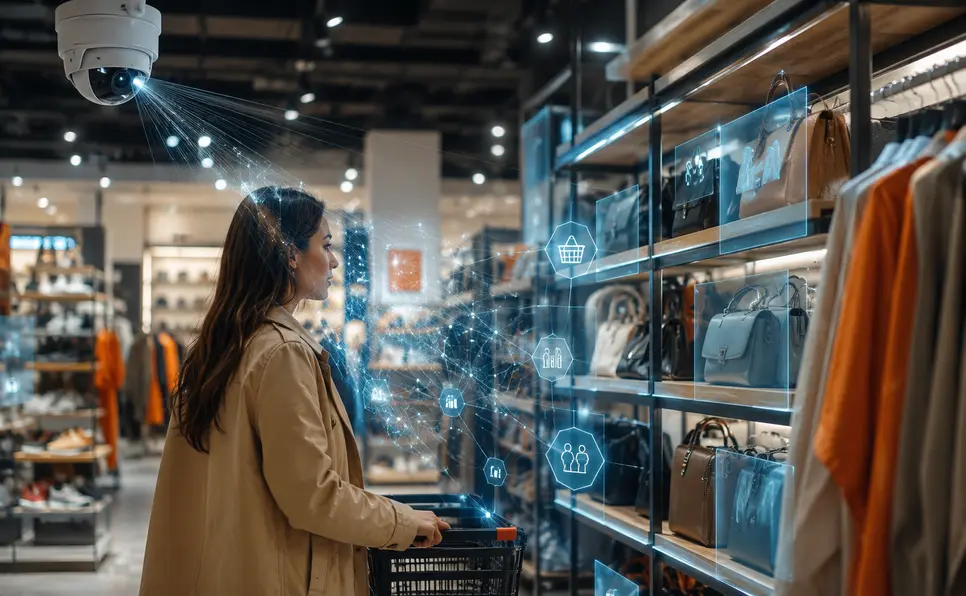
A shopper picks up a $40 bottle of whiskey, glances around, and slides it into a jacket pocket. No cashier saw it. No alarm went off at the door. But a camera did see it, and within seconds, a store manager’s phone buzzed with an alert and a photo. That’s not science fiction anymore. That’s a Tuesday afternoon in a growing number of stores right now.
This is the story of how AI-powered computer vision can transform retail, with theft detection as one of the clearest, most measurable wins. It’s a topic making the rounds across LinkedIn among retail executives, loss prevention managers, and tech professionals right now, and for good reason. This guide breaks down how AI-powered computer vision can transform retail theft detection specifically, what’s actually happening on the ground, why it matters, and what it means for anyone working in or around retail today.
The Scale of the Problem AI-Powered Computer Vision Is Solving in Retail
Retail shrink isn’t a small line item. U.S. retailers lost an estimated $90 billion to inventory shrink in a recent year, and roughly $66 billion of that was considered preventable, according to recent retail industry benchmarks. That’s not a rounding error. That’s the difference between a healthy profit margin and a store barely breaking even.
External theft, including shoplifting and organized retail crime, accounts for roughly 36% of total shrink, while employee theft, inventory errors, and operational mistakes make up much of the rest. So this isn’t only about shoplifters. It’s about barcode switching at self-checkout, mis-scans, and mistakes that quietly drain profit every single day.
Retail shrink costs US retailers an estimated $47 billion annually, approximately 2% of total annual revenues, and that figure is the single most powerful commercial driver behind accelerating investment in AI-powered loss prevention surveillance, according to PatSnap’s patent landscape analysis. Numbers like that explain why computer vision moved from a security add-on to a boardroom priority.
What AI-Powered Computer Vision Actually Does Inside a Retail Store
Computer vision is a form of AI that reads video the way a person reads a page. It looks at camera feeds and picks out patterns: a hand reaching toward a shelf, an item slipping into a bag, a customer lingering too long near an exit.
Computer vision technology uses AI to process visual information from video feeds such as store surveillance cameras, enabling it to detect patterns and extract insights, according to BizTech Magazine’s coverage of the NRF 2026 retail conference. As one industry executive put it during that conference panel, product walks out of stores for many different reasons, and retailers simply don’t have visibility into most of them, which is fundamentally an information problem that cameras are well suited to solve.
This matters because a security guard can watch maybe four or five monitors at once, tops. A computer vision system can watch every camera in a store, all day, without blinking or getting bored. It doesn’t replace staff. It gives them information they never had before.
How AI-Powered Computer Vision Theft Detection Actually Works
Understanding the mechanics removes the mystery. Here’s the general process most systems follow.
Behavior Pattern Recognition
Instead of just recording footage for later review, modern systems analyze behavior in real time. Core behavior analysis tracks what customers are doing, noting furtive glances or unusual movements when they conceal merchandise, and pings staff to check on them, a method detailed in AppIntent’s review of computer vision theft detection platforms. The goal isn’t just catching a theft after the fact. It’s giving an employee a natural reason to engage with a customer before anything leaves the store.
Scan Mismatch Detection at Checkout
Computer vision at self-checkout can flag barcode switching and bypassed scans in real time, rather than after a transaction closes, a capability outlined in Spot AI’s 2026 retail loss prevention software guide. This is one of the most common forms of retail theft: someone scans a $2 item’s barcode while bagging a $20 item. A camera trained to compare what’s picked up against what’s scanned catches that mismatch instantly.
Blind-Spot Monitoring
Blind-spot detection technology monitors areas that are not easily visible to staff or cameras, helping identify potential theft or unscanned items in real time, which improves loss prevention and inventory accuracy. Every store has a few corners where sightlines break down. AI-powered cameras cover those gaps continuously, something a rotating staff schedule can never fully guarantee.
Real-World Deployment
In June 2025, Trigo Vision Ltd., an Israel-based computer vision technology firm, introduced a computer vision-AI-powered loss prevention solution designed to detect and stop in-store theft by tracking shopper behavior, spotting unscanned or concealed items, and sending instant alerts to store security, all while maintaining a frictionless, privacy-first shopping experience, as detailed in a 2026 market report on AI-driven retail theft deterrence.
This solution utilizes existing closed-circuit television networks combined with advanced computer vision to detect suspicious behavior in store aisles, eliminating the need for additional capital investment by using existing infrastructure. That last detail matters a lot for smaller retailers. This isn’t only a tool for massive chains with unlimited security budgets. Many systems now work with cameras stores already own.
Why Camera-Agnostic Systems Are Changing How Retail Adopts Computer Vision
A few years ago, adding AI theft detection meant ripping out old security cameras and installing an entirely new system. That’s expensive, disruptive, and slow.
The dominant 2026 approach is camera-agnostic platforms that layer AI analytics onto existing IP cameras instead of requiring a full hardware replacement, per Spot AI’s software comparison guide. This shift lowers the barrier to entry significantly. A mid-sized grocery chain or a regional pharmacy doesn’t need a massive infrastructure overhaul anymore. The cameras already mounted above the registers can often be upgraded through software alone.
This is a big part of why adoption is accelerating so fast across retail, not just among the largest players.
Beyond Theft: How AI-Powered Computer Vision Can Transform Retail Even Further
Theft detection gets the most attention, but computer vision touches far more of the store than loss prevention alone.
Inventory Accuracy
AI-powered computer vision applied to inventory management works the same way it does for theft detection. Cameras trained on shelves can spot when a product is out of stock, misplaced, or running low, often faster than a human walking the aisle would notice. This closes the gap between what a system says is in stock and what’s actually sitting on the shelf.
Customer Flow and Store Layout
Retailers use AI-powered computer vision and anonymized movement data to understand which aisles get the most traffic and where customers tend to slow down or skip past entirely. That insight shapes everything from shelf placement to staffing schedules during peak hours.
Smarter Returns Handling
AI can help retailers spot issues when customers are making returns, since a fidgety or suspicious-looking customer at the return desk can prompt a manager to step in and take over that transaction personally, a scenario cited by CDW’s vice president of strategic enterprise at NRF 2026. This turns a passive process into an active one, catching return fraud before it’s finalized rather than discovering it in a monthly audit.
Organized Retail Crime Detection
AI-powered video cameras, access control systems, and self-checkout monitoring play major roles in early detection of organized retail crime, according to Solink’s 2026 breakdown of retail theft prevention devices. This type of theft involves coordinated groups, not lone shoplifters, and it’s grown into one of the costliest categories of retail shrink. Pattern recognition across multiple store visits and multiple individuals is something no single employee could track manually.
The Market Growth Behind AI-Powered Computer Vision in Retail
The numbers behind this transformation are hard to ignore. The AI-driven retail theft deterrence market is projected to grow from $2.62 billion in 2025 to $3.12 billion in 2026, at a compound annual growth rate of 19.1%, and is expected to reach $6.26 billion by 2030, according to a global market report on AI-driven retail theft deterrence.
This growth is attributed to a combination of factors: growing retail shrinkage issues, rising incidents of shoplifting, wider adoption of CCTV systems, and continued advancements in AI-powered computer vision technology itself. Looking ahead, growth is expected to keep accelerating due to AI-driven predictive analytics, tighter integration between IoT sensors and security devices, global retail chain expansion, and rising demand for contactless, automated retail security solutions.
That last point, predictive analytics, is worth pausing on. The next phase of this technology isn’t just catching theft as it happens. It’s flagging risk patterns before an incident occurs at all, based on time of day, product category, and store zone history.
Real Concerns Worth Addressing Honestly
None of this comes without valid questions, and pretending otherwise would be dishonest.
Privacy
Constant AI-powered camera-based behavior tracking raises real privacy questions, even when a company markets itself as privacy-first. Shoppers generally don’t opt into this kind of retail surveillance explicitly, and transparency about what’s tracked, stored, and shared matters. Retailers adopting this computer vision technology should be upfront with customers about what these systems do and don’t collect.
False Positives
Sensitivity settings need adjustment to avoid annoying staff with bad alerts, and a system that flags too many innocent customers as suspicious creates real problems, both for customer experience and for staff trust in the tool itself. AI plays a role by detecting suspicious patterns, automating alerts, accelerating investigations, and reducing false positives, allowing loss prevention teams to focus on higher-impact tasks instead of chasing every flagged alert manually, as Solink’s guide on theft prevention devices explains.
No System Is a Guarantee
These actions assist a retail team and reduce the likelihood that incidents go unaddressed, though no system can guarantee prevention. Computer vision is a tool for better information, not a magic fix. A store still needs trained staff who know how to act on an alert appropriately and fairly.
What Retailers Should Look for Before Adopting AI-Powered Computer Vision
For anyone evaluating an AI-powered computer vision platform for retail theft detection for the first time, a few practical questions cut through the marketing noise fast.
Does the platform work with cameras already installed, or does it require a full hardware replacement? Camera-agnostic systems save both time and money during rollout. How is detection accuracy measured, and how often does the vendor report on false-alarm rates rather than just successful catches? A platform that only highlights wins without discussing false positives isn’t giving the full picture.
Does the system integrate with existing point-of-sale and inventory management software, or does it operate as a completely separate silo? Integration matters because isolated alerts without context slow down staff response time. Finally, what does the vendor say about data retention and customer privacy? A serious retailer should be able to explain, in plain language, how long footage is stored and who has access to it.
How AI-Powered Computer Vision Fits Alongside Older Retail Loss Prevention Tools
Computer vision isn’t replacing every tool retailers already use. It’s working alongside them.
Electronic article surveillance is a deterrent focused on exits, while RFID is an item-level tracking system that supports both shrink reduction and inventory accuracy. Electronic article surveillance detects movement, while video provides context, and together they create stronger, more accurate loss prevention workflows than either technology could deliver alone.
This layered approach matters because no single tool catches everything. A tag at the door tells a store something was left without being deactivated. A camera tells a store who took it, when, and how. Combining both gives loss prevention teams a far more complete picture than relying on one signal in isolation.
The Patent Race Behind AI-Powered Computer Vision in Retail
The pace of innovation in this space is easy to underestimate from the outside, but the patent activity tells a clear story. AI-powered surveillance, spanning computer vision, edge inference, and LLM-orchestrated multi-agent systems, is now the primary technology battleground for recovering retail losses, with the patent landscape shifting rapidly toward prescriptive, privacy-preserving, and predictive architectures, according to PatSnap’s patent landscape analysis.
The most recent architectural direction combines on-device edge inference with IoT sensor fusion, enabling low-latency local detection while preserving scalability through cloud aggregation. In plain terms, that means the smarts increasingly live right inside the camera or nearby hardware, rather than sending every frame to a distant server and waiting for a response. That speed difference matters when the goal is catching something as it happens, not reviewing it the next morning.
One notable 2026 patent filing applies computer vision to self-checkout terminal camera feeds to detect both intentional and unintentional scanning failures as shrink risk events, feeding a two-model machine learning pipeline covering shrink risk identification and mitigation recommendation. This shows where the technology is heading: not just flagging a problem, but recommending exactly how staff should respond to it.
Getting Started Without a Massive Budget
Smaller retailers often assume this kind of technology is out of reach financially. That assumption is increasingly outdated.
Because many solutions integrate multiple camera angles and behavior models to minimize blind spots and false positives while using existing infrastructure, eliminating the need for additional capital investment and reducing both costs and deployment time. A single-location store or a small regional chain can often pilot this technology in one location, evaluate the alert quality over a few weeks, and expand only if the results justify the cost.
Starting small also helps staff adjust naturally. A sudden company-wide rollout tends to overwhelm teams with alerts before anyone has learned how to interpret them properly. A phased approach gives loss prevention teams time to calibrate sensitivity settings and build trust in the system’s accuracy before scaling further.
Frequently Asked Questions
Does AI-powered computer vision replace store security staff?
No. It gives staff better information and faster alerts, but a person still needs to respond to and evaluate every flagged incident.
Can AI-powered computer vision theft detection work with older security cameras?
In many cases, yes. Camera-agnostic platforms are increasingly common, allowing stores to add AI analytics without replacing existing hardware.
Is AI-powered computer vision only useful for large retail chains?
No. Because many systems work with existing camera infrastructure, smaller retailers can adopt this technology without the massive upfront costs once required for a full security overhaul.
Does AI-powered computer vision only help with theft detection?
No. The same underlying technology supports inventory accuracy, customer flow analysis, return fraud detection, and organized retail crime pattern recognition, beyond just catching individual shoplifters.
Final Takeaway: How AI-Powered Computer Vision Can Transform Retail Theft Detection Going Forward
AI-powered computer vision is changing retail in a way that goes well past catching a single shoplifter in the act. It’s closing an information gap that’s cost the industry tens of billions of dollars every year, largely because retailers simply couldn’t see what was happening across every aisle, every register, and every blind spot at once.
Retail theft detection is the clearest and most immediate use case for AI-powered computer vision, but it’s really just the entry point. The same cameras already mounted in most stores are becoming tools for smarter inventory management, safer returns processing, and faster response to organized retail crime.
This technology isn’t perfect, and it shouldn’t be treated as a silver bullet. False positives, privacy questions, and the need for trained human judgment all remain real considerations. But the direction is clear: cameras that used to just record are now built to understand what they’re seeing, and that’s exactly how AI-powered computer vision can transform retail for the better, one store at a time.
For more on how AI systems process visual and behavioral data responsibly, TechInGot’s breakdown of cybersecurity basics covers the fundamentals worth understanding alongside any surveillance technology rollout. And for a look at how tracking technology plays a similar transparency role in a completely different industry, TechInGot’s guide on food traceability technology shows the same core idea: better visibility, better outcomes, applied to an entirely different supply chain.